FAQ
The Project Team
-
Hill Residential, part of Hill Group, is the second largest private housebuilder in the country, with strong leadership and an excellent management team. Our independence means we are highly agile in our decision-making and flexible in our operations. This allows us to continue building on existing relationships through delivering on what we promise and forge new ones based on our reputation.
-
The project team is made up of seven expert consultancies, who share Hill’s vision and are responsible for delivering the following services:
Turley – Project Management, Planning, Economics, Sustainability & Strategic Communications
Gort Scott – Masterplanning
Morris + Company – Masterplanning
BMD – Landscape & Visual and Green Infrastructure
SLR – Transport and Highways Services
EFM – Education Services
EDP - Heritage
Why Hatton?
Where is the site located?
The site is located on privately-owned land north of the M40 and between Hatton and Warwick Parkway stations.
Within easy reach of Birmingham, Coventry, Warwick, Leamington, Stratford, Oxford and London, the site is well-placed to become home to a new mixed community designed around green space, active travel and rail connectivity.
Click to enlarge
Does South Warwickshire need this many new homes?
The UK is currently experiencing a widely acknowledged housing shortage, with millions of people unable to either buy or rent their own homes. The emerging South Warwickshire Local Plan is predicated on 1,679 homes coming forward per annum over the plan period. However, under the proposed December 2024 changes to the National Planning Policy Framework, Warwick and Stratford District Councils will be required to deliver 2188 homes per year between them.
Why is this the right place for a new community?
The South Warwickshire Local Plan identifies railway corridors as an option for priority development, to help reduce car dependency and create new sustainable communities to meet the growing demand for new homes.
Land east of Hatton railway station represents an exciting opportunity to benefit from access to two underused stations with direct connections to Birmingham, London, Oxford, Warwick, Leamington Spa and Stratford-upon-Avon. Combined with the masterplan’s proposed active travel corridors, this location would be one of the most sustainable for a new community anywhere in the Midlands.
The site is owned by a single family, creating a unique opportunity to deliver a carefully planned and cohesive new community at Hatton, including new purpose-built public services and active travel routes.
This contrasts with the alternative of incremental development on the edge of existing towns and villages, adding additional strain to public services and infrastructure across Warwickshire. Strategic development enables improvements that benefit existing communities as well as new residents by delivering new infrastructure that would not be feasible or viable through a smaller scale approach.
Can you build on the Green Belt?
Green Belt is a planning term dating back to the mid-20th century. Land was designated as Green Belt to contain urban growth and to keep land open, at a time when the UK’s population was nearly 20,000,000 people fewer than it is today. Contrary to popular belief, the term does not represent all “undeveloped” land, which actually constitutes 91.1% of the UK’s total area as of 2022. Green Belt land itself encompasses only 13% of the total area in England.
Whilst the Green Belt continues to serve its original purpose within its designations across the country, it no longer reflects the reality of housing demand in the UK. The Government is reconsidering how the term is applied to land that no longer reflects or delivers on its original purpose. Authorities that cannot meet their new housing requirements will be required to conduct a Green Belt review. The current Green Belt designation is unfairly applied, with largely rural counties like Leicestershire, Shropshire and Suffolk having no land at all designated as Green Belt.
For more than seven decades, land has been released from the Green Belt to meet the nation’s housing needs. Today, with the UK in the midst of a housing crisis and successive governments having failed to deliver the new homes needed to keep home prices and rents affordable for millions of people, the new government has mandated a nationwide Green Belt review, with further Green Belt release permitted where housing needs cannot be met on alternative sites.
Why not redevelop brownfield land before the Green Belt is touched?
South Warwickshire’s Issue and Options Consultation and Urban Capacity Study highlighted that even if all the brownfield sites in the South Warwickshire were developed for housing, it would not be sufficient to meet the identified need.
Suitable greenfield and Green Belt sites for housing are therefore essential to meeting housing need in South Warwickshire and the wider West Midlands.
Any decision on whether the Green Belt can be built on in this location will be taken through the South Warwickshire Local Plan and ‘exceptional circumstances’ would need to be properly justified to enable any development on Green Belt land.
What are the proposals?
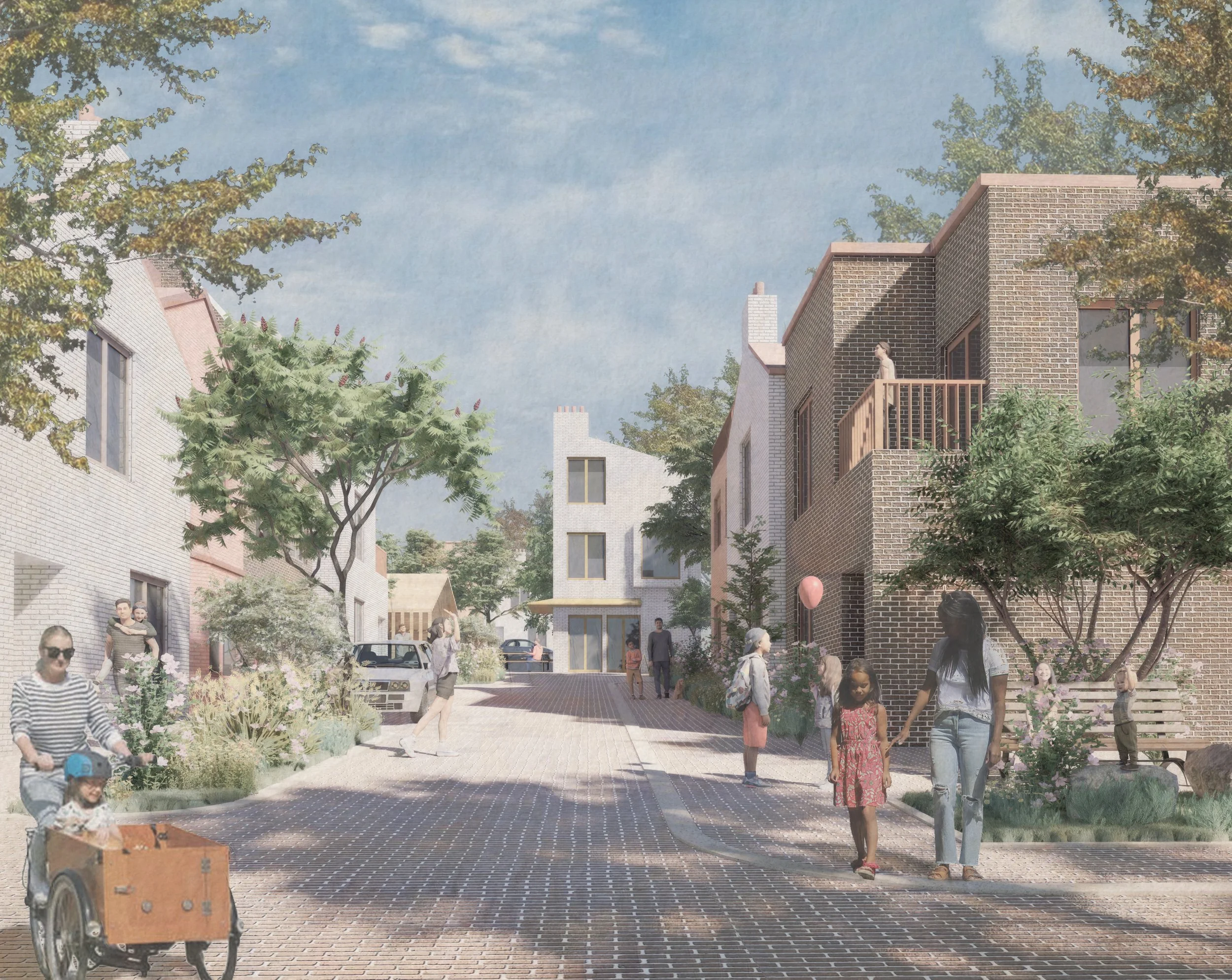
The proposals envisage the phased delivery of three characterful villages alongside new landscaping, active travel routes, accessible green spaces and sports facilities, including a linear park along the Grand Union Canal.
The new community would also deliver essential local services including two new primary schools and a new secondary school for existing and new residents, along with a new community health hub, GP surgery, dentist, and pharmacy.
In total, the three villages would create up to 4,500 new homes by the mid 2050s.

Can Hatton really support these new homes?
The benefit of creating a brand-new community in a comprehensively planned way means the delivery of homes, spaces and infrastructure can be carefully planned to ensure they meet the needs of current and future residents. It is anticipated that the new homes would be delivered in three phases, with new infrastructure and public services built at each stage to ensure that no additional burden is placed on existing facilities used by current residents.
In turn, the delivery of the new villages will support better use of Hatton railway station, which currently experiences relatively low passenger numbers and limited service provision.
Is there enough railway capacity?
The proposals envisage a sustainable community located between two underutilised railway stations at Hatton and Warwick Parkway. Despite its location on the London Marylebone-Birmingham Moor Street Line, three live platforms, and being adjacent to a delta junction with the Leamington Spa-Stratford line, Hatton station is not optimised for use. These proposals include fully accessible routes to Hatton from all directions, as well as new ticket machines, waiting rooms, retail choices, a cycle hub, and restrooms.
Even without the proposed development, West Midlands Railway Executive is planning increased service provision at Hatton. The new community would then add to this by supporting the business case for signalling improvements outside Leamington which would help provide increased and more reliable rail connectivity to Stratford, Leamington, Warwick, Birmingham and Coventry.
The project team is engaging directly with Midlands Connect, Chiltern Railways and the West Midlands Rail Executive to ensure that these improvements are feasible and viable.
Click to enlarge
Will there be affordable housing?
Many young residents of Warwick, Kenilworth and the surrounding villages are currently unable to afford their own home in or near the communities they grew up in.
The site will aim to deliver a range of policy-compliant affordable housing types to ensure that the growing demand for a wide variety of home sizes, tenures, and budgets can be met.
Which organisations have you engaged with during this process?
West Midlands
Rail Executive
Warwickshire
County Council
Warwickshire County Cricket Club
Canal & River Trust
Active Travel England
Coventry Diocesan Board
of Education
NHS Coventry and Warwickshire
Chiltern Railways
Norton Lindsey Parish Council
Budbrooke Medical Centre
Midlands Connect
Shrewley Parish Council
Budbrooke Parish Council
Hatton Parish Council
Keep Hatton Station Rural
Warwick District Council
Wider community benefits
-
The proposals will open up previously inaccessible private land, creating new North-South and East-West routes for pedestrians and cyclists. A newly landscaped park will complement the Grand Union Canal and Hatton Locks, enhancing the area’s natural beauty and accessibility.
The project team has engaged with the Canal and River Trust to ensure that the masterplan respects the existing canal setting and infrastructure whilst creating more parkland and promoting all modes of active travel between Hatton and Warwick. -
As part of our engagement programme, we continue to listen carefully to the local community, who have raised concerns about the lack of public services that exist today, and have ensured that this site can create a viable business case to deliver the high-quality public services that residents want. As the development will be delivered at scale, it offers the opportunity to unlock new public services that would not be possible with incremental development elsewhere.
Our proposals will deliver two new primary schools and a new secondary school, alongside a new community health hub, including a GP surgery and pharmacy to serve the local community. These will be built at the same time as the rest of the development, avoiding a situation where new homes put additional pressure on existing services.
The project team has been engaging with the Coventry and Warwickshire Integrated Care Board and local education providers to ensure that these proposals are credible and deliverable. -
The development will deliver a minimum of 10% biodiversity net gain, putting active travel, sustainability and green infrastructure improvements at the centre of its masterplanning.
A significant amount of the site is earmarked for new publicly accessible green space and active travel routes, reducing reliance on cars and encouraging healthy living.A new linear park will be created along the banks of the Grand Union Canal, providing new active travel routes parallel to the towpath amongst new landscaping to deliver a desirable new place to visit, relax and enjoy.
-
Hatton Country World will remain open to the public as it does today. As an established centre of community and commercial activity, Hatton Country World will provide an immediate destination for new residents in the heart of the villages and look to evolve in serving the existing and new growing community.
-
The project team is undertaking a proactive engagement programme with local residents, parishes, community groups and elected members. The project team commit to transparency and clarity in all our correspondence with these stakeholders.
The project team has already undertaken a 3-month initial insight gathering exercise, collecting a statistically and demographically representative sample from those who live in and around South Warwickshire. The results were clear:
65% of people agreed that there is a shortage of housing in their price range where they live.
63% of people strongly agreed with the creation of a new settlement with sustainable infrastructure in South Warwickshire.
71% considered walking and cycling connectivity to be important or very important, with 66% considering good rail links important or very important.
A formal public consultation will be undertaken on the South Warwickshire Local Plan.
If Hatton Villages is subsequently allocated through the Local Plan, there would be further public consultation on subsequent planning applications.
The next steps and project timelines
I have already seen a masterplan circulated online, is this the right version?
The project team is aware that a previous masterplan, which was submitted to the last Warwick District Council Call for Sites exercise has been published online and is now circulating locally. This document was produced for a previous masterdeveloper and does not reflect the proposals being put forward today on behalf of Hill Residential.
An updated masterplan will be formally submitted to Warwick District Council as part of the Regulation 18 Local Plan consultation. The project team has informed the local parishes and Keep Hatton Station Rural group that the previous masterplan is not an accurate reflection of the Hill’s proposals as detailed on this website.
What happens next?
The project team will continue to engage extensively with key stakeholders, local parishes, ward members and Officers and Councillors at Warwick District Council whilst the masterplan is progressed.
When would construction begin?
If the allocation and planning applications are approved, the first phase of construction would not begin until the late 2020s. The site would be delivered in phases rather than in one piece, reducing the impact of construction traffic and allowing new public services to be delivered alongside housing completions.